Before the chicks arrive
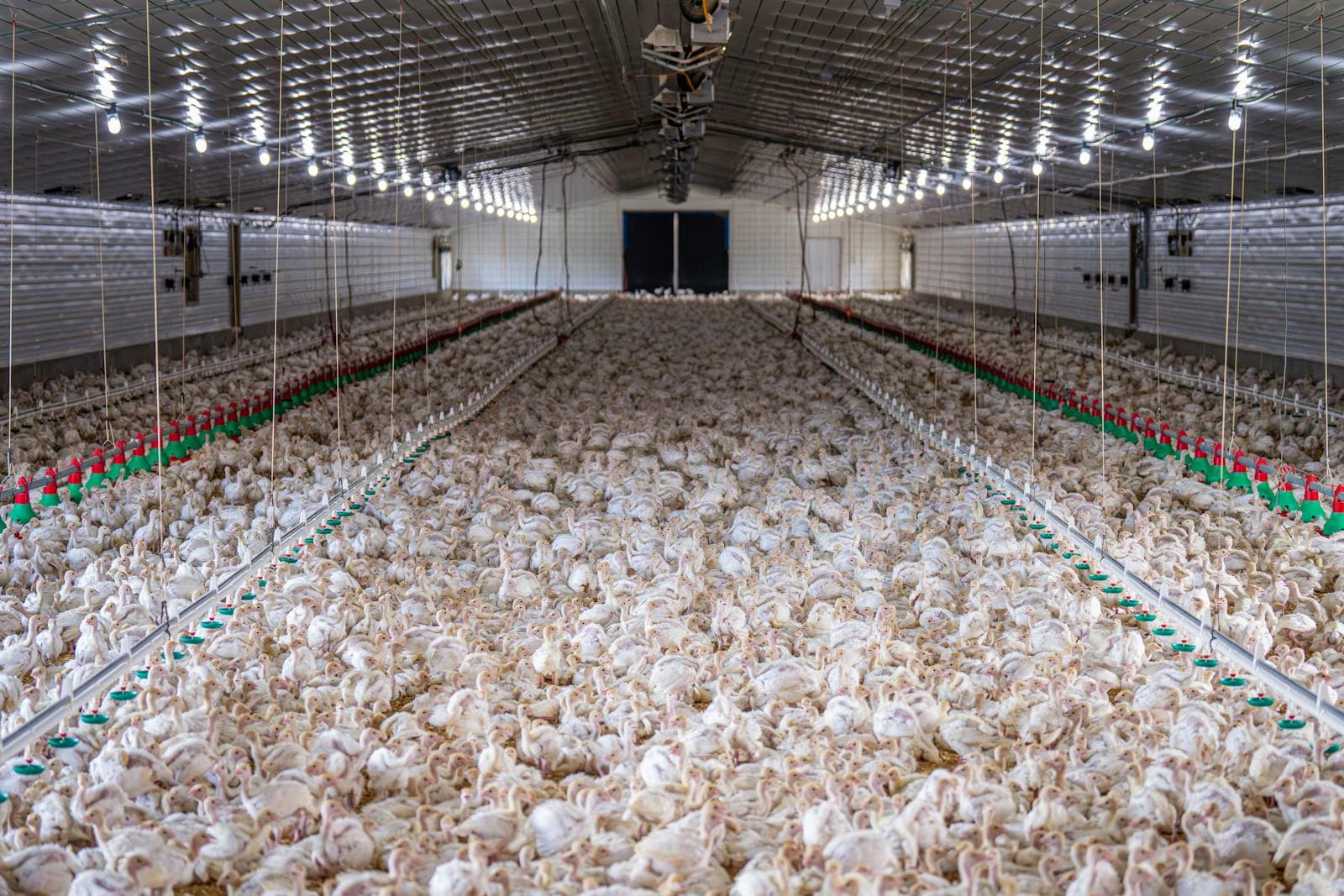
Create the batch first, on the day you place. The placement record is the foundation every later number is calculated from, so it is worth two minutes of care.
- Chicks delivered and dead in boxes on arrival — enter both. FuroTrack subtracts them for you and fills in the starting count, so the "150 − 3 = 147" you would otherwise do in the margin is done once and cannot be got wrong.
- Day-old weight — the average weight at placement. This is not decoration: the seven-day check is a multiple of it. Chicks are typically around 40 g, and smaller from young parent flocks.
- Age at placement — 0 for day-olds. If you are placing point-of-lay pullets it is around 112 days, and every age-banded target depends on getting this right.
- House, hatchery and delivery reference — these are what let you trace a bad crop back to its source.
Birds that were dead in the boxes never joined the flock. Keep them out of your mortality figures or every liveability number for the rest of the cycle will be wrong.
Every day: seven things
Open Poultry → Daily Round, pick the flock, and fill in what you actually observed. Leave anything you did not measure blank — a blank is honest, a zero is a claim.
- Birds died and birds culled, separately. They have different causes and both come off the flock.
- Cause — required whenever either number is above zero.
- Feed issued, in kg, and which ration.
- Water used, in litres, from the meter.
- House minimum and maximum temperature — both ends, not an average. Reset the min-max thermometer after reading it, or tomorrow's minimum is silently this week's.
- Ammonia, if you measure it.
- Anything you noticed — bird behaviour, wet litter, a blocked drinker line.
What the system works out
These appear as you type and none of them is an input. They are the sums a paper card leaves to you:
- Bird age today, from the placement date
- Birds lost today, and cumulative losses since placement
- Mortality to date as a percentage of birds placed — the number that decides whether a flock gets investigated
- Liveability
- Water-to-feed ratio, against the expected band for the age
- House temperatures against the guide for that age
- PEF, once you have a weight and an FCR
Weekly: weigh properly
Weigh once a week at minimum, and take the sample correctly — three separate lots of 50 to 70 birds, cordoned off and spread around the house. A sample caught from wherever is easiest is biased toward the slower birds that did not run away, and it biases every number computed from it.
Record the sample size, the average and the CV. The CV is your uniformity: a rising CV means the flock is spreading out, usually a feed or water access problem.
When something moves
The round raises tasks rather than just colouring a number. A water-to-feed ratio that falls, a house below its temperature band, ammonia above the limit, or weak birds recorded will each create a task with what to check. Work the task list rather than trying to remember what the numbers meant.
What not to bother with
If you run a small backyard or scavenging flock, most of this does not apply and you should not pretend otherwise. Birds, losses, eggs and sales are enough. FCR and PEF describe a crop grown to weight on measured feed; they do not describe a flock that feeds itself, and forcing the comparison tells you nothing.
Try it yourself — start free
Create an account and follow this workflow with your own farm records.
Start free